Who will actually pay?
Find a buyer with a reason to change, then test a small offer that helps you distinguish a polite reply from a buying decision.
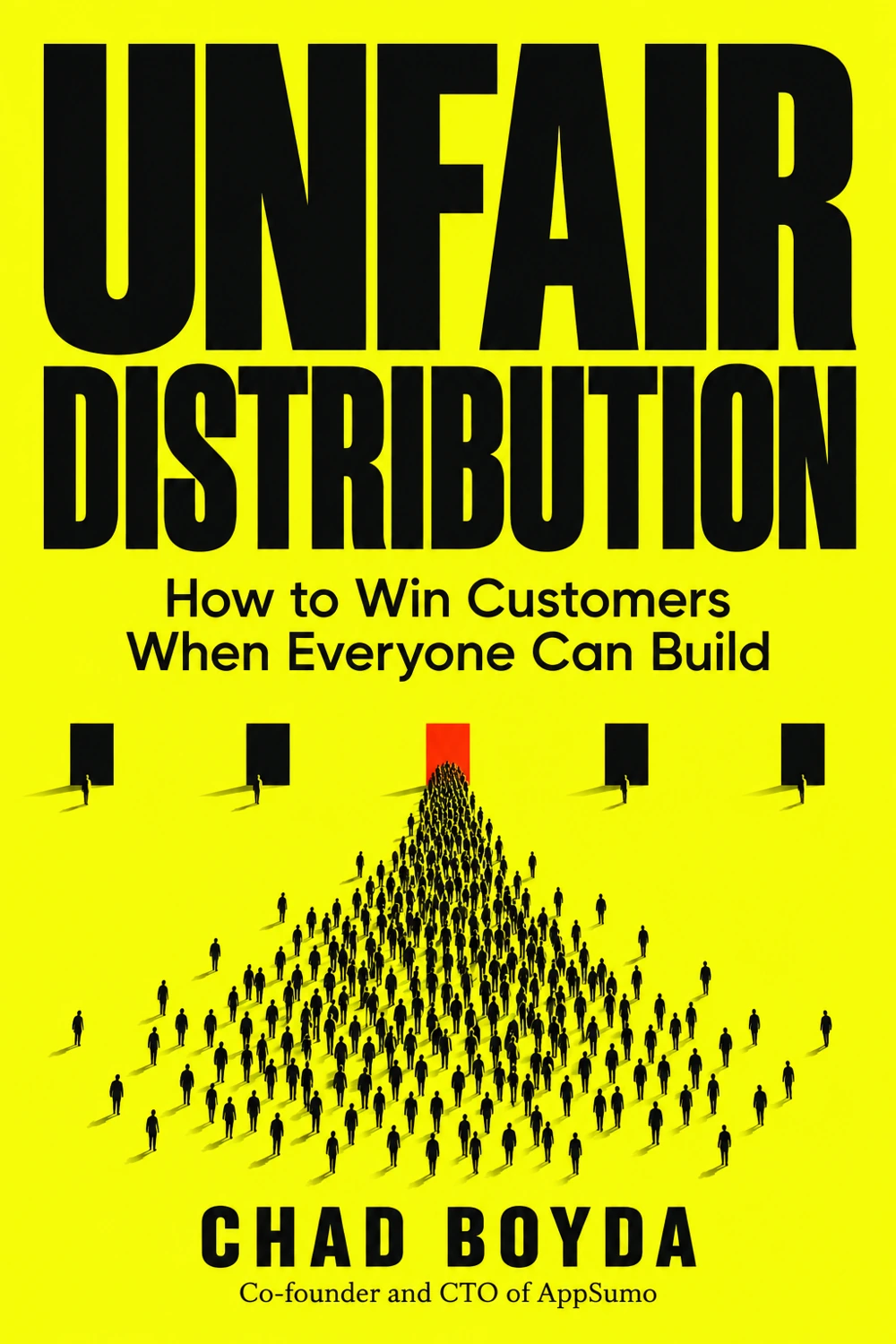
Unfair Distribution
How to Win Customers When Everyone Can Build
Distribution is your most important feature. Build it first. Learn how to reach paying customers, test an offer, and use AI to do more of the work with a small team.
From $19 USD · Early access · PDF & EPUB · Updates included
You’ve shipped the product and posted the link, and people have told you they like it. Now you need to find out whether they’ll pay.
Should you email potential buyers? Build a free tool? Find a partner who already reaches them? This book helps you choose a test you can afford and work out whether it brought you customers.
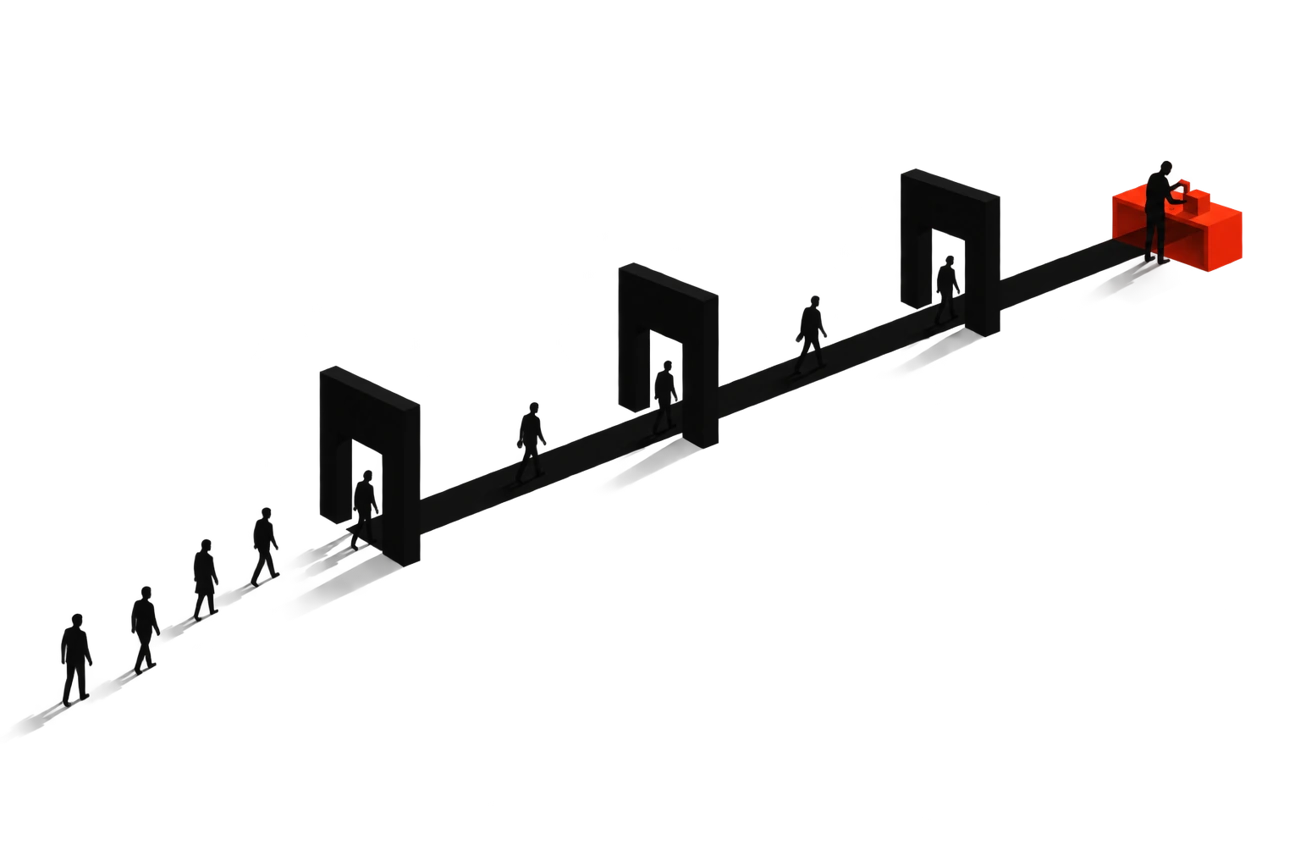
For bootstrapped founders and small teams, from the first paying customer to a business that can keep winning them.
Find a buyer with a reason to change, then test a small offer that helps you distinguish a polite reply from a buying decision.
Work through sales, content, search, partners, and paid ads. Choose how to reach your buyer based on the work it takes.
Count setup, service, and your own time before deciding whether you can afford to win the next customer.
Research a buyer’s problem, make a useful demonstration, and test a small service. Check the work before you put your name on it.
From Chapter 3
Can you afford to win this customer?
One AppSumo giveaway brought in far more email subscribers. The smaller one brought in more gross profit.
We gave away two MacBook Air laptops and brought in 48,187 subscribers and $11,550 in gross profit. An entrepreneur getaway brought in 3,846 subscribers and $26,573 in gross profit.1
The entrepreneur prize was aimed at a more specific interest, but these were different campaigns, not a controlled test. The figures don't prove that the prize alone caused the difference. They do explain why I wouldn't choose the next campaign by signup count alone.
Gross profit is revenue minus the costs included in that measure, which in this case excluded the giveaways themselves. The laptops cost $2,400; the getaway cost $2,500. Subtract those prize costs and you're left with $9,150 and $24,073, before any other campaign costs missing from the figures. We also don't know how much those buyers would have spent without the giveaway.
An excerpt from the current edition. Chapter 3 shows how to count the cost of winning a customer before you spend more.
1. Campaign figures: AppSumo’s giveaway results, published by Noah Kagan. Campaign profit figures are rounded to the nearest dollar.
Read the book on Leanpub
Before AppSumo, I built a product that a few friends and family tried but no one was willing to pay for. That startup left me more than $100,000 in personal debt.
During AppSumo’s first year, I worked without pay as we pursued a goal of one million email subscribers. We built dashboards and met every week to test ways of reaching small business owners who needed software.
An email list gave us a way to reach those people again, so each new software deal could start with an audience that already knew us.
I wrote this book for founders facing the same question: how do you get people to buy what you build?
You can read all 18 chapters now. I’m still refining the examples, explanations, and layout. Your purchase includes access to future ebook updates through Leanpub.
The early-access ebook in PDF and EPUB, with worked examples, practical exercises, and illustrations. Purchase and download it through Leanpub.
Leanpub gives purchasers access to updated editions of the ebook as they are published. Your Leanpub library is where you’ll find your files.
Yes. The book moves from first sales to repeatable growth, retention, and deciding where to spend a small team’s time. Start with the decision you are facing now.
You can start with a few potential buyers. The early chapters show how to find them, test an offer, and learn from their response. Later chapters cover email, useful tools, content, partners, and paid ads as ways to reach more people.
Sign up for future emails from Chad on reaching buyers, testing offers, and using AI, plus updates as the book develops.
Unfair Distribution
How to Win Customers When Everyone Can Build
From $19 USD · All 18 chapters · Early access